01 Reflections

Notes at the intersection of theory and practice.


Six reflections, drawn from across the five content pillars below. Grounded in classroom observation across nine cohorts at CFVG, in three decades of country leadership, and in the recent empirical literature on AI in graduate education. Freely available to read.

The model in practice

Practice-by-practice walkthroughs, worked examples, common failure patterns.

Career development

What the Discerning Practice Model changes for people who work and study for a master's degree.

Teaching

What nine cohorts of working professionals at CFVG taught the practitioner.

Management theory

Mintzberg, Kolb, Mezirow, Argyris and Schön, Senge, Drucker.

Field notes from the AI moment

What credentials and AI tools cannot replace, and why the practices are AI-resistant by construction.

REFLECTION 01 The model in practice

Why your strategic thinking is invisible, and what to do about it

There is a moment, somewhere around the seventh or eighth year of a serious career, when a person realizes that the people deciding their future cannot actually see what they are good at.

The decision they are good at making, the situation they read accurately, the pattern they recognized three weeks before anyone else. None of it is visible to the senior leader making the next promotion decision. None of it is visible to the program director writing the recommendation letter. None of it is visible to the future self who will, ten years on, try to remember what they used to know.

The gap is not in their thinking. The gap is in the documentation of it.

Senior leaders decide who is strategic based on what they can see. What they can see is what you have committed to paper. A written recommendation. A clear memo. A one-page argument. A documented decision with the reasoning attached. If your strategic thinking lives only inside your head and inside meetings, it is, from the outside, indistinguishable from its absence.

This is not unfair. It is unavoidable.

A leader making a promotion decision cannot inspect the inside of your mind. They can only inspect the artifacts your mind has produced. The manager who thinks brilliantly in conversation and writes nothing down is, from the outside, identical to the manager who does not think brilliantly at all. The graduate student who reasons her way through a hard case in the discussion section, but whose written work is generic, will be remembered, fairly or not, as a generic student.

After eight years standing in front of Executive MBA classrooms at CFVG, watching nine cohorts of working professionals move through the program, this is the part I believe more deeply than before. They arrived with sharp market instinct and years of hard-earned experience. Many had every reason to trust their judgment. But experience alone rarely creates structure. And strategy is not the quality of an idea. It is the discipline of making that idea usable by other people, and by your own future self.

The five practices of the Discerning Practice Model exist for one reason: to make the thinking you already do legible to the people who will decide what you get to do next, and to the version of you who will inherit your present judgment six months from now. The Decision Hypothesis preserves what you predicted and when. The Operating Manual preserves how you actually decide. The Friday Synthesis preserves how you process a week.

None of these practices makes you a better thinker. They make the thinking you already do legible.

The hardest part is that the practices feel slow. Writing a Decision Hypothesis takes longer than just deciding. Writing a Friday Synthesis takes longer than just remembering the week. The slowness is not a side effect of the method. It is the method.

Speed is what you optimize for when execution is the constraint.

Visibility is what you optimize for when judgment is the constraint.

By the time you are working and studying at once, the constraint has changed. Most people in that position are still optimizing for the wrong one, and wondering why the degree is not showing in their work, or why their thesis supervisor cannot quite see what they are working on.

I have promoted managers whose thinking I had no direct evidence of, on the strength of a single clearly written memo. I have also failed to promote excellent thinkers whose thinking never reached the page. The first kind of mistake is recoverable; better evidence usually surfaces later. The second is not. By the time the thinking would have appeared, the decision has been made.

If you have ever wondered whether your work is being seen, start there. The work is being seen.

The thinking is not.

← Back to all reflections Dr. Phuong Nguyen

The weekly practice I teach my students and coach my managers is free at drpnguyen.com.

REFLECTION 02 Career development

The plateau is not a knowledge problem
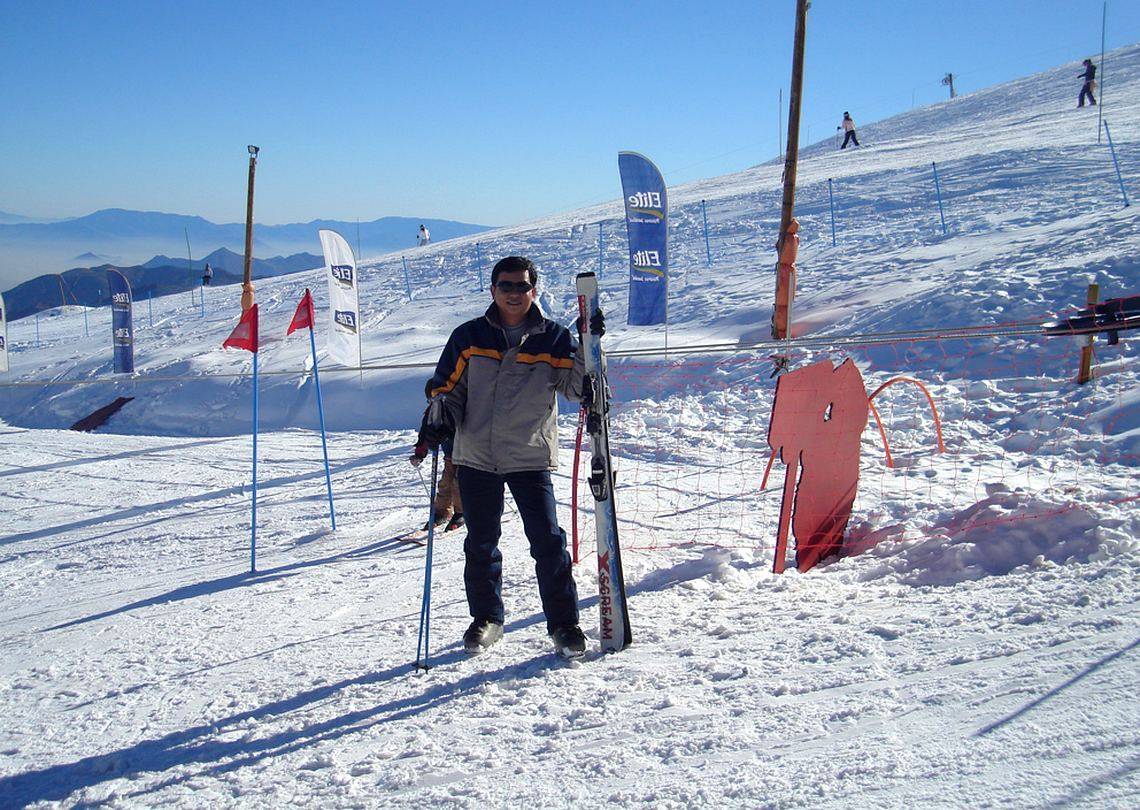
Dr. Phuong Nguyen on the slopes of La Parva, Chile

La Parva · Chile · May 2008

There is a photograph of me from May 2008, on the slopes of La Parva in Chile.

In the photograph, I am holding ski poles. The light is good. The pose is confident. Anyone looking at the image would assume the man in it knew what he was doing.

I had read the equipment manual the night before. I had quietly watched the beginner instructors that morning. I had skied perhaps fifty meters before the photograph was taken.

What makes me smile about that photo now, almost twenty years later, is what the photo did not keep. It did not keep the wobbliness. It did not keep the quiet conversation I had with myself about being forty-one and starting something I did not yet do well. Photographs preserve confidence. They do not preserve the practice that produced it, or the practice that was still missing.

I think about that photo often when I talk to my students, working managers in the middle of a career and a degree, about plateaus.

Most people who plateau in their thirties or forties believe they need more knowledge to move forward. So they enroll in another course. They read another book. They start a master's degree, and keep the job. The plateau remains.

This is the central misdiagnosis of the plateau. I see it most clearly in working master's students who finish their first year and quietly notice, when no one is watching, that the framework they can recite has not yet changed how they made yesterday's decision at work.

The plateau is rarely a knowledge problem. It is a practice problem.

The habits that built your early career (execution speed, technical fluency, willingness to work hard) are not the habits that build judgment. Early-career success rewards doing more of what is asked. The next stage, whether you reach it through promotion or through a graduate program, rewards a different question: doing what is asked, while simultaneously building the judgment that allows you to be asked harder things.

Most professional development is event-based. You attend the workshop, return to your desk, and, in my observation, most of what you learned is gone within a few months. The same pattern shows up in graduate education. You finish the course, hand in the assignment, and the work makes no observable change to how you operate on Monday morning. The pattern has been documented in the experiential learning literature for more than forty years. It is universal. It is the reason most professional development, including most graduate education, produces less than it promises.

The Discerning Practice Model replaces events with practices.

A practice is not a lesson. It is a short, fixed, repeated activity done on a known cadence. Fifteen minutes once a month for the Stretch Inventory. Fifteen minutes every Friday for the Friday Synthesis, thirty when you have them. Four lines on a card before any meaningful decision. None of this is heroic. All of it is compounding.

The truest part of growth, I have come to believe, begins from steps that are still wobbly. The student who installs these practices in the first term has, by the time of the thesis, a year of dated material no other student in the class can produce. The one who installs them late, in the thesis year, still begins to grow again at a stage where many classmates have stopped.

A book is something you finish.

A practice is something you keep.

The careers that compound, and the degrees that change the people who earn them, belong to the ones who have understood the difference.

← Back to all reflections Dr. Phuong Nguyen

The weekly practice I teach my students and coach my managers is free at drpnguyen.com.
REFLECTION 03 Teaching

What I learned, eight years and nine cohorts later, that I could not have learned any other way

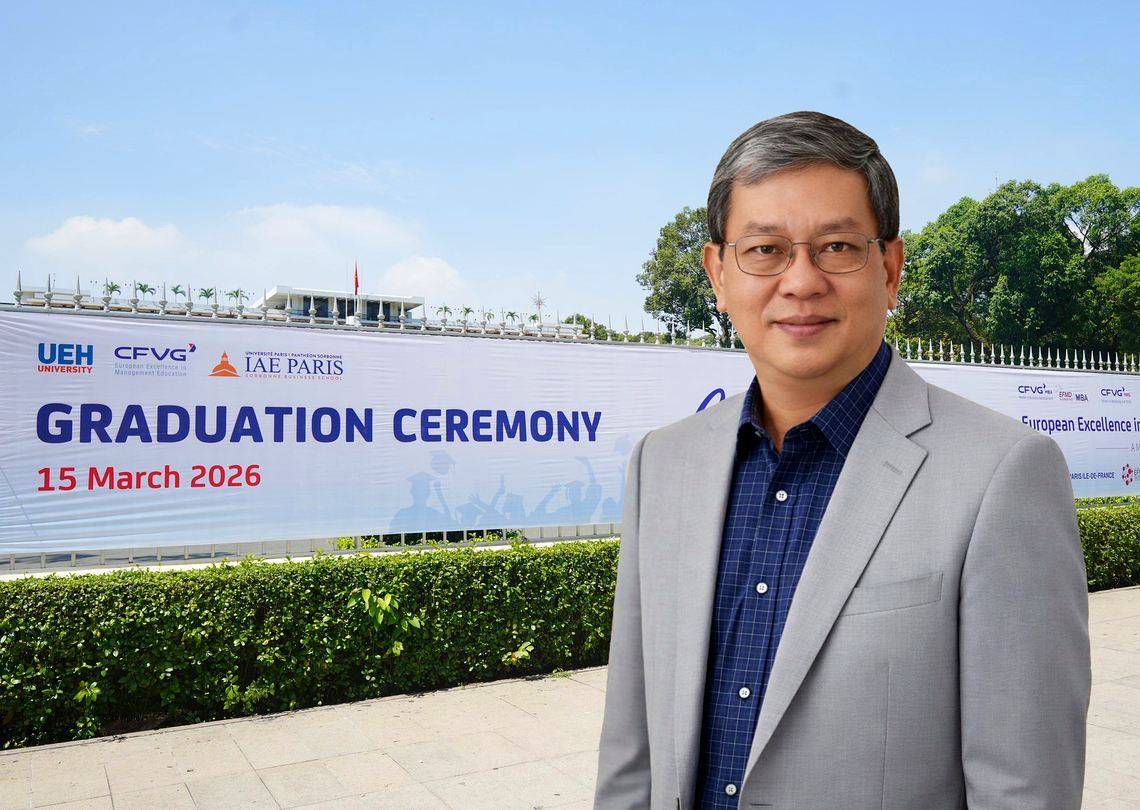
Dr. Phuong Nguyen at the CFVG Graduation Ceremony, Ho Chi Minh City, March 2026

CFVG Graduation Ceremony · Ho Chi Minh City · 15 March 2026

The photograph is from the CFVG Graduation Ceremony on 15 March 2026, in Ho Chi Minh City. I had stood through eight of these by then, including a few I remember more vividly than others. This was the ninth.

When I first walked into a CFVG classroom in May 2017, I thought I knew why I was there. I had more than two decades of country leadership behind me. I had launched brands, run P&Ls, built and rebuilt teams across Vietnam, Cambodia, and Myanmar. I assumed I was being asked to bring that experience into the room, a practitioner among scholars translating frameworks into the specifics of the local market.

That was not what teaching turned out to be.

What teaching turned out to be was watching, with care, while a particular kind of failure happened, again and again, to people who had every reason not to fail. The students who came to CFVG were not novices. They were senior managers, country heads, finance directors, people with fifteen and twenty years of operating experience. They could read a case. They could recognize a framework. They could explain, in the discussion section, exactly what Mintzberg or Kotler or Porter would say about the situation in front of them.

And then, the following week, they would describe a real decision they had made at work, and the framework would have left no trace.

Not because they had forgotten it. They could still recite it on demand. The framework simply had not been available to them at the moment of decision. It lived in the seminar room and not in the office. By Monday morning, they were operating from the same instincts they had walked in with.

I had thought, at first, that this was a problem of individuals. Some students were better at integration than others, and the rest needed time. After the third cohort, I began to suspect it was not about the individuals. After the fifth, I was certain. The pattern was too consistent. The same brilliant managers, with no obvious deficit of intelligence or motivation, were producing the same gap between framework recognition and framework operationalization.

It was not a problem of individuals. It was a problem of method.

The graduate education we were giving them (the lectures, the cases, the readings, the exams) was almost perfectly designed to produce framework recognition. It was almost perfectly silent on framework operationalization. We were assessing what was easy to assess, and assuming the harder thing would happen on its own. It did not happen on its own. The credential was being conferred on a transformation that was, in many cases, not actually taking place.

What we now call the Discerning Practice Model is the answer those nine cohorts taught me to construct. The Friday Synthesis. The Decision Hypothesis. The Operating Manual. The five practices were not invented. They were reverse-engineered from the gap between what the program promised to do and what, year after year, it was actually doing.

Standing in front of the graduation banner on 15 March 2026, I watched the most recent cohort take their seats, and I understood graduation differently than I had at the first ceremony. Graduation is not the moment a credential is conferred. Graduation, when the work has been discerning practice, is the moment a person walks out of the program with a dated record, in their own words, of what they decided, what they expected, and what really happened.

Most graduations are not that.

The work of the next decade is to make more of them so.

← Back to all reflections Dr. Phuong Nguyen

The weekly practice I teach my students and coach my managers is free at drpnguyen.com.
REFLECTION 04 The model in practice

The Friday afternoon nobody planned for

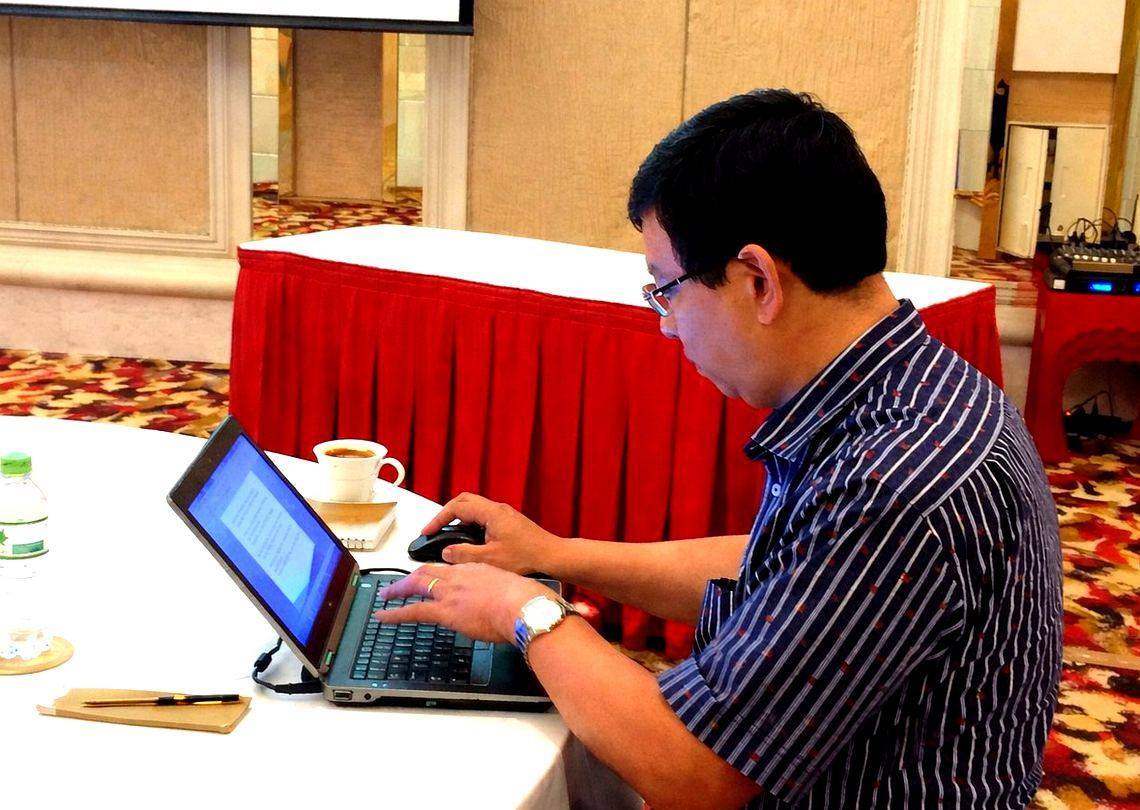
Dr. Phuong Nguyen working on a laptop at a hotel function room, between conference sessions

Between sessions, working through a synthesis · Vietnam

It is the second day of a two-day conference in a hotel ballroom in the south of Vietnam, and it is twenty minutes before the afternoon sessions resume. The room is empty. The staff are in the back, resetting microphones. My coffee has gone half cold. My notebook sits closed beside the laptop, with the pen across it.

The synthesis is overdue by a day. I had meant to write it yesterday. I will write it now.

I open the document. The cursor blinks.

The first three prompts are not the hard ones. What happened this week, I can write quickly: there were two long meetings about a brand we are repositioning, a difficult conversation with a senior team member, and a decision I had to make on Tuesday that I am still not sure was the right one. What assumption did I make that turned out wrong, I can also write, though more slowly. The Tuesday decision was the one. I had assumed the team would resist the change. They did not resist. They were quietly relieved, which means I had been carrying a story about them that was not accurate, possibly for months.

What general principle does this illustrate. I write a sentence I have written before, in slightly different words, three or four times across the previous Fridays. Resistance is sometimes a story the leader is telling, not a property of the team.

I look at the sentence for a moment. It is true. It is also the kind of true sentence that, by itself, will not change anything I do on Monday morning.

The fourth prompt is sitting there, and it is the one I want to skip.

Where would this principle mislead me.

This is the prompt that takes the longest. It is also the prompt I have, a few times in earlier weeks, written something glib for, just to get to the end of the document. It would mislead me if I assumed teams never resist, I might write, which is the kind of sentence that satisfies the form of the practice without satisfying its purpose. The boundary statement is supposed to be the point at which the principle stops being a slogan and becomes usable, and a glib boundary statement leaves the principle a slogan.

So I sit with it for a minute. Then I write something more honest. This principle would mislead me with the team I worked with three years ago, where the resistance was real, sustained, and rooted in their own correct read of a situation I had misjudged. If I generalize from this Tuesday, I will start hearing relief where there is, in fact, careful disagreement.

I look up. The staff are setting the front of the room. Two delegates have wandered back in. I have about four minutes. I save the document with the date in the filename, close the laptop, and slide it into my bag.

I know two things about this synthesis that I did not know fifteen minutes ago. I know that I have been carrying an inaccurate story about my current team. And I know the conditions under which the new principle I just wrote would betray me. Neither of those would have surfaced if I had spent the same fifteen minutes scrolling through email or lingering over the empty coffee.

The practice is not always done at the desk where it should be done. It is done in hotel function rooms. It is done in airport lounges. It is done on the train back from a meeting, on the morning of the day after the missed Friday. The practice is not the room. The practice is the discipline of writing the fourth prompt honestly, wherever the laptop happens to be open.

Twelve weeks of this is one Operating Manual revision and a small library of dated honesty.

A year of this is a thesis.

A career of this is a different kind of career.

← Back to all reflections Dr. Phuong Nguyen

The weekly practice I teach my students and coach my managers is free at drpnguyen.com.
REFLECTION 05 Management theory

What Mintzberg saw that the textbooks miss

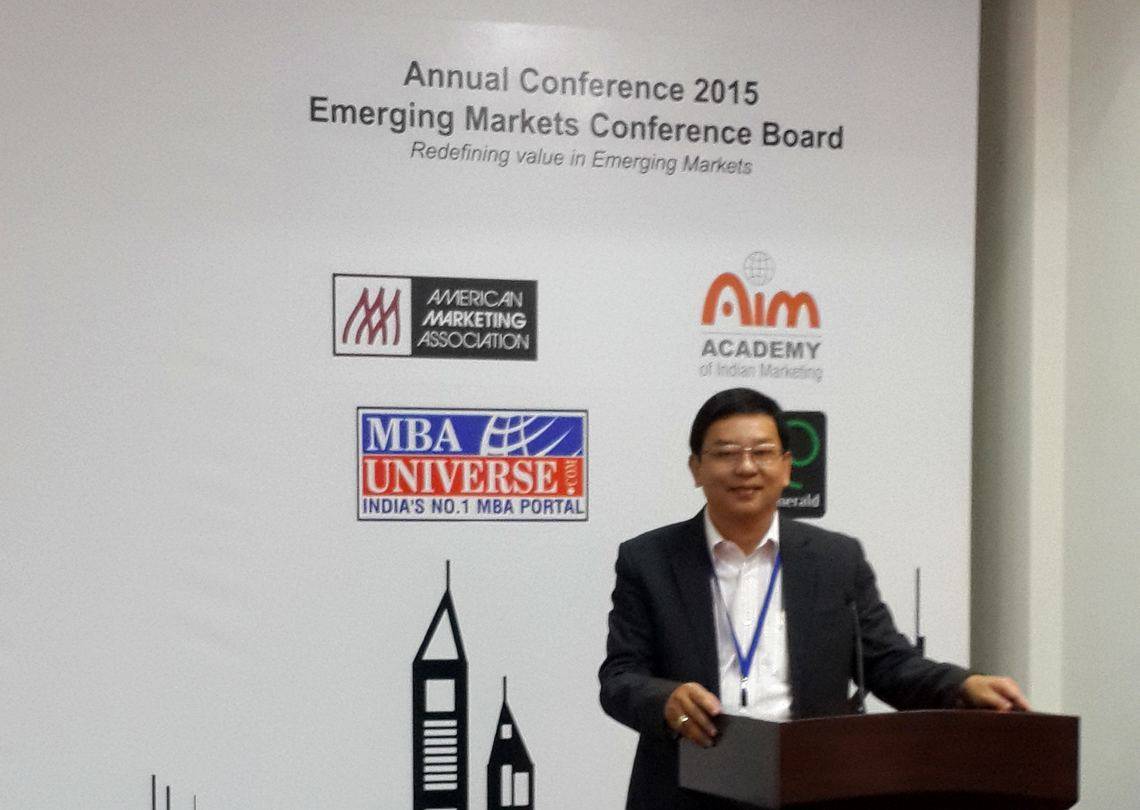
Dr. Phuong Nguyen presenting at the Annual Conference of the Emerging Markets Conference Board, Dubai

Annual Conference of the Emerging Markets Conference Board · Dubai · January 2015

Dubai, January 2015. The Annual Conference of the Emerging Markets Conference Board.

I was midway through a doctoral program at the Sorbonne. I had convictions, not yet certainty.

The dominant thinking that week was Marketing 3.0, Kotler's call to move beyond customer-centricity toward human-centricity. Values. Purpose. The soul of the brand, not just its function. It felt like a destination.

It was actually a departure gate.

In the decade that followed, Kotler kept moving. So did the discipline. 4.0 went where the customer went, digital and omnichannel and always on. 5.0 asked how to use technology in the service of humanity rather than instead of it. The latest version is asking the harder question that this decade requires: in an age of generative AI and hyper-personalization, how does a brand stay legibly human?

Each version did not cancel the previous one. It raised the floor.

The marketers I respect most are not the ones who have arrived at the latest version. They are the ones still asking what the latest version is missing.

This is the move I learned from Henry Mintzberg, more than from any other thinker. Not Mintzberg's specific framework, which is itself now decades old, but the intellectual posture that produced it. The willingness to treat the textbook as a description that may have stopped describing the world.

The textbooks describe what managers should do: they plan, organize, lead, and control. These four verbs were borrowed from a hundred-year-old French industrial framework. They are clean. They are teachable. They are also wrong.

Mintzberg, observing real managers in real organizations across decades of empirical research, found something different. Real managers do not plan in long uninterrupted sessions. They handle a hundred small fragments of work in a single day. They lead through informal communication, much of it verbal, almost all of it under time pressure. They control through attention: choosing, hour by hour, what to notice and what to let go.

The textbook manager is a fiction the curriculum needed in order to be teachable.

The real manager is a more interesting figure: improvisational, fragmented, deeply embedded in relationships, working in conditions of permanent incompleteness.

This matters because the gap between the textbook and the reality is where most management failure lives. A young manager trained on the textbook arrives at the job and finds they cannot do what the textbook described. They conclude they are doing the job wrong.

They are not. They are doing the real job, which the textbook never told them about.

The same gap operates inside graduate education. The MBA student trained on cleanly bounded cases arrives at her own Tuesday afternoon decision and finds that the framework she just mastered is not actually available to her at the moment of choosing. She concludes she has not yet learned the framework well enough. She has. The framework she has learned describes a manager the textbook needed, not the manager she will actually become.

Mintzberg's contribution is not a new framework. It is permission to take the real job seriously.

The Discerning Practice Model rests on this recognition. The Friday Synthesis is not a tool for the manager who plans in long sessions. It is a tool for the professional whose week was fragmented and who needs a fixed fifteen minutes to integrate what the fragments meant. The Decision Hypothesis is not for the textbook conditions of a clean case study. It is for the operator under pressure, with incomplete information, who nevertheless needs to be able, six months later, to learn from what was decided.

What I carry from that Dubai podium is not a framework. It is a posture. The willingness to treat what I have just mastered as the starting point, not the summit.

← Back to all reflections Dr. Phuong Nguyen

The weekly practice I teach my students and coach my managers is free at drpnguyen.com.
REFLECTION 06 Field notes from the AI moment

The credential, the assistant, and what neither can replace

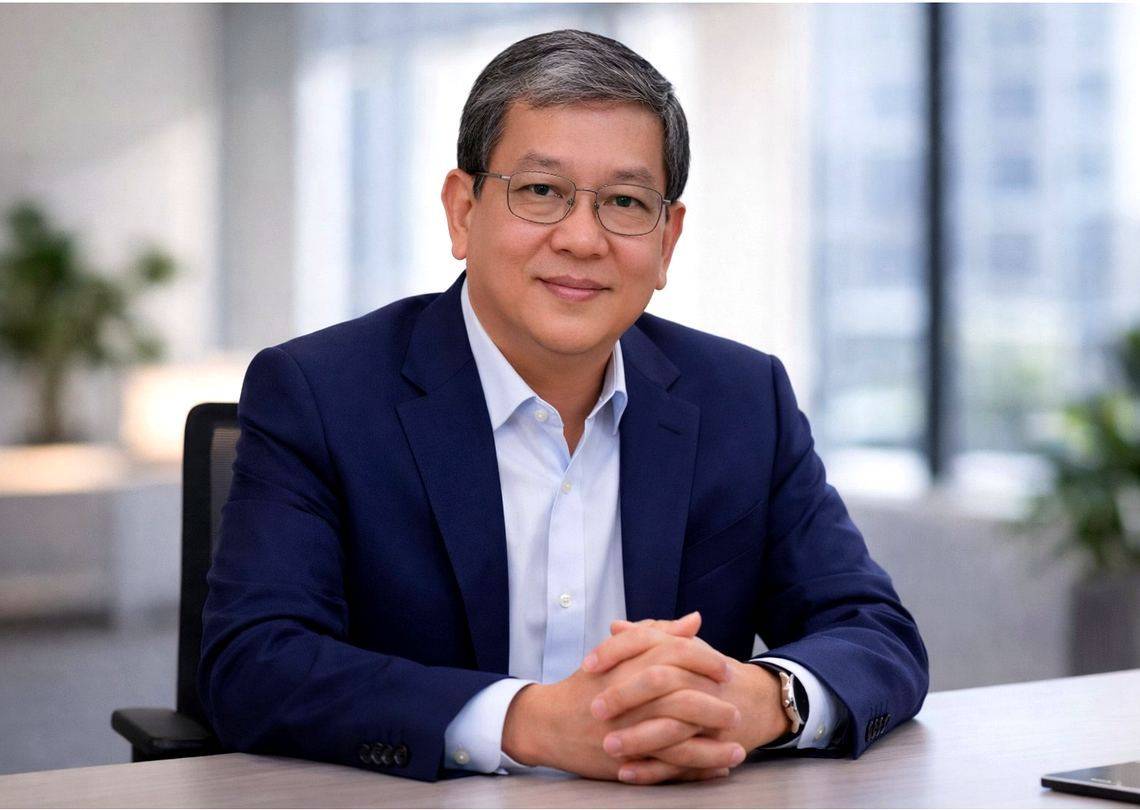
Portrait of Dr. Phuong Nguyen

I have spent thirty years watching what credentials do for people, and what they do not do for them.

The MBA does not produce, by itself, the manager who can decide under pressure. The medical degree does not produce, by itself, the clinician who can sit with a worried parent. The PhD does not produce, by itself, the scholar who can hold a hard question open for the years it takes to answer. The credential, in every case, opens a door. The work that follows the door is what produces the person.

This was true in 1991, when I finished medical school in Hue. It was true in 2008, when I finished an MBA at Maastricht. It was true in 2017, when I defended a doctoral thesis in Paris. The credential never did the work. It signaled that a certain amount of work had been done. The two are not the same.

What is new, in 2026, is that the door now comes with an assistant on the other side of it.

The assistant is patient, articulate, and available at three in the morning. It will draft the strategy memo. It will summarize the case study. It will write the reflection paragraph the program assigns, in serviceable academic prose, in under a minute. A graduate student under deadline, exhausted from a fifty-hour week at work and a Wednesday-night seminar, can submit work that looks adequate without doing the cognitive work the program was designed to extract from them.

A 2025 study by Fan and colleagues randomly assigned university students to learn with or without ChatGPT support. The AI-assisted group produced essays with higher scores. The same group showed no greater knowledge gain or transfer. The authors named the pattern metacognitive laziness: students outsourced the planning, monitoring, and evaluation phases of learning to the tool rather than scaffolding their own thinking with it. A 2025 study of postgraduate students in Hong Kong, by Yao and colleagues, found the same pattern in academic writing. The work submitted was acceptable. The student behind the work was not changed by producing it.

This is the failure mode the credential cannot defend against. A degree produced under metacognitive laziness is, on paper, indistinguishable from a degree produced through actual cognitive labor. The transcript looks the same. The diploma looks the same. The graduate looks the same, until they have to make a decision their AI is not in the room for.

The Discerning Practice Model addresses this directly, but not by trying to outrun the assistant. It addresses it by being built around precisely the cognitive work the assistant cannot do for the student. Writing from memory rather than from notes. Predicting an outcome before consulting any tool. Naming a principle in your own words and pairing it with the situation where the principle would mislead you. Producing a Friday Synthesis of a week the student actually lived, not of a week the tool can describe in general.

The practices are AI-resistant by construction, not by accident. An assistant that drafts the synthesis destroys the synthesis. A tool that produces the principle removes the part of the principle that compounds. The architecture refuses, structurally, to let the work be ghostwritten.

What the practices preserve is the one thing neither the credential nor the assistant can supply. A dated record, in your own words, of what you decided, what you expected, and what really happened, so you can see where you were right and where you were wrong. That record is what survives. That record is what compounds. That record is what makes the difference, ten years on, between a graduate who can recognize their own thinking and a graduate who cannot quite remember whose voice the document is in.

The credential gets you through the door.

The assistant will type whatever you ask of it.

What neither can do is be the person on the other side.

← Back to all reflections Dr. Phuong Nguyen

The weekly practice I teach my students and coach my managers is free at drpnguyen.com.

Fifteen minutes this Friday.

Four questions, in your own words, on paper or in a document of your own. One prompt arrives by email every Friday at 07:00 GMT+7. Fifteen minutes to start. Thirty when you have them. The practice is free and stays free.

Start the free weekly practice