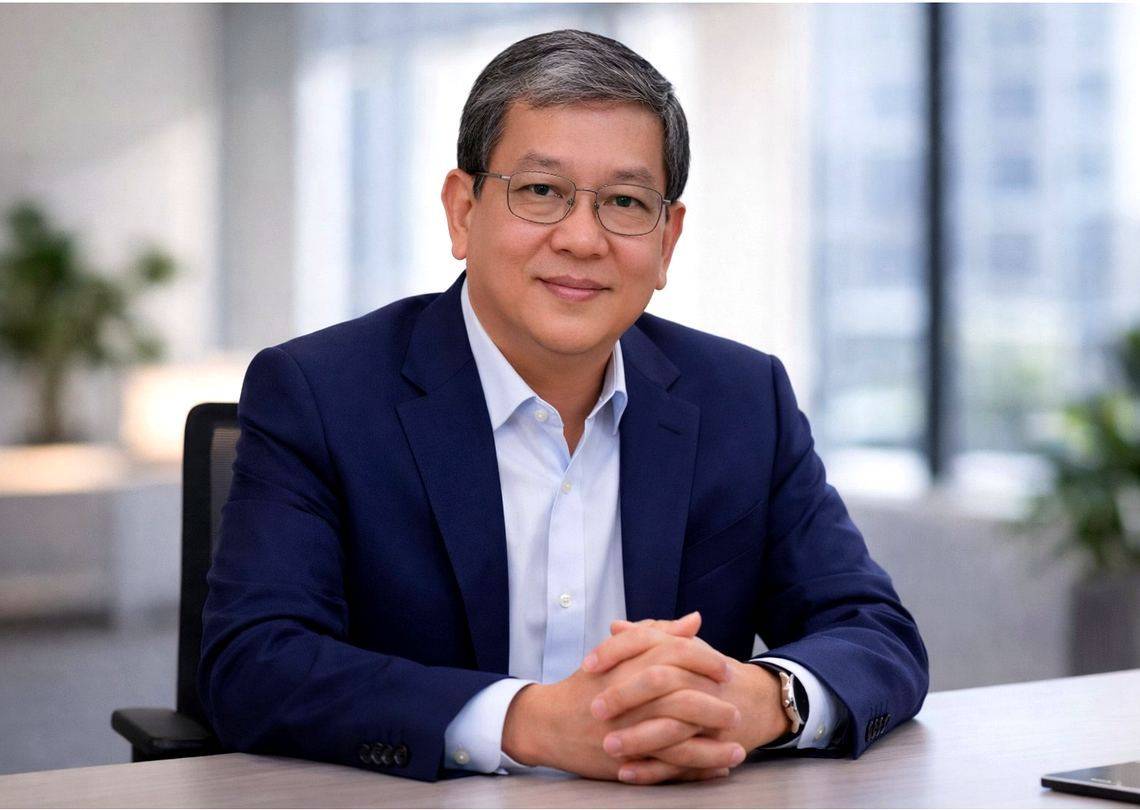
I have spent thirty years watching what credentials do for people, and what they do not do for them.
The MBA does not produce, by itself, the manager who can decide under pressure. The medical degree does not produce, by itself, the clinician who can sit with a worried parent. The PhD does not produce, by itself, the scholar who can hold a hard question open for the years it takes to answer. The credential, in every case, opens a door. The work that follows the door is what produces the person.
This was true in 1991, when I finished medical school in Hue. It was true in 2008, when I finished an MBA at Maastricht. It was true in 2017, when I defended a doctoral thesis in Paris. The credential never did the work. It signaled that a certain amount of work had been done. The two are not the same.
What is new, in 2026, is that the door now comes with an assistant on the other side of it.
The assistant is patient, articulate, and available at three in the morning. It will draft the strategy memo. It will summarize the case study. It will write the reflection paragraph the program assigns, in serviceable academic prose, in under a minute. A graduate student under deadline, exhausted from a fifty-hour week at work and a Wednesday-night seminar, can submit work that looks adequate without doing the cognitive work the program was designed to extract from them.
A 2025 study by Fan and colleagues randomly assigned university students to learn with or without ChatGPT support. The AI-assisted group produced essays with higher scores. The same group showed no greater knowledge gain or transfer. The authors named the pattern metacognitive laziness: students outsourced the planning, monitoring, and evaluation phases of learning to the tool rather than scaffolding their own thinking with it. A 2025 study of postgraduate students in Hong Kong, by Yao and colleagues, found the same pattern in academic writing. The work submitted was acceptable. The student behind the work was not changed by producing it.
This is the failure mode the credential cannot defend against. A degree produced under metacognitive laziness is, on paper, indistinguishable from a degree produced through actual cognitive labor. The transcript looks the same. The diploma looks the same. The graduate looks the same, until they have to make a decision their AI is not in the room for.
The Discerning Practice Model addresses this directly, but not by trying to outrun the assistant. It addresses it by being built around precisely the cognitive work the assistant cannot do for the student. Writing from memory rather than from notes. Predicting an outcome before consulting any tool. Naming a principle in your own words and pairing it with the situation where the principle would mislead you. Producing a Friday Synthesis of a week the student actually lived, not of a week the tool can describe in general.
The practices are AI-resistant by construction, not by accident. An assistant that drafts the synthesis destroys the synthesis. A tool that produces the principle removes the part of the principle that compounds. The architecture refuses, structurally, to let the work be ghostwritten.
What the practices preserve is the one thing neither the credential nor the assistant can supply. A dated record, in your own words, of what you decided, what you expected, and what really happened, so you can see where you were right and where you were wrong. That record is what survives. That record is what compounds. That record is what makes the difference, ten years on, between a graduate who can recognize their own thinking and a graduate who cannot quite remember whose voice the document is in.
The credential gets you through the door.
The assistant will type whatever you ask of it.
What neither can do is be the person on the other side.
The weekly practice I teach my students and coach my managers is free at drpnguyen.com.
Four questions, in your own words, on paper or in a document of your own. One prompt arrives by email every Friday at 07:00 GMT+7. Fifteen minutes to start. Thirty when you have them. The practice is free and stays free.
Start the free weekly practice